



Have you ever wondered if your digital streaming habits are keeping pace with the latest government mandates? The way we consume television is evolving, and with it, the rules governing our screens have undergone a massive transformation.
The Media Act 2024 represents the most significant overhaul of the public service media framework in two decades. These legislative shifts are essential to ensure that viewers maintain universal access to high-quality content in an increasingly fragmented digital market.
Understanding the current IPTV UK law is vital for both service providers and everyday users. As we navigate these UK IPTV regulations, it becomes clear that the government is prioritising the modernisation of broadcast standards to protect the interests of the public. This article explores how these changes impact your viewing experience and the future of digital media.
Key Takeaways
- The Media Act 2024 modernises the public service media framework.
- Legislative updates ensure universal access to essential content.
- New standards aim to harmonise digital distribution across the nation.
- Organisations must adapt to stricter compliance requirements.
- Viewers should recognise the importance of these regulatory shifts.
The Current State of IPTV UK Law
The rapid shift toward personalised streaming has fundamentally altered the way we interpret UK IPTV regulations. Historically, television relied on one-to-many distribution, where a single signal reached a broad audience simultaneously. Today, the landscape has moved toward personalised 1-to-1 distribution over the internet, which complicates traditional broadcast oversight.
Defining IPTV within the UK Legal Framework
At its core, Internet Protocol Television (IPTV) involves the delivery of television content via packet-switched networks. Within the current IPTV UK law, this technology is categorised based on how the content is transmitted and accessed by the end-user. Regulators must distinguish between legitimate streaming services and those that operate outside the established legal boundaries.
Because the delivery is now highly individualised, monitoring compliance has become a significant challenge for authorities. The law must account for both the infrastructure providers and the content distributors to ensure that copyright protections remain effective in a digital-first environment.
Distinction Between Authorised and Unauthorised Services
A critical divide exists between authorised services and unauthorised streams. Authorised platforms hold the necessary licensing agreements to broadcast content, ensuring that creators and rights holders receive proper compensation. Conversely, unauthorised services often bypass these protections, leading to significant legal risks for both the providers and the users.
The following table outlines the primary differences between these two types of service models:
| Feature | Authorised Services | Unauthorised Services |
|---|---|---|
| Licensing | Fully licensed content | No legal rights held |
| Security | Encrypted and secure | High risk of malware |
| Compliance | Follows UK regulations | Operates illegally |
| Reliability | High uptime and support | Frequent service drops |
Understanding these distinctions is essential for anyone navigating the modern digital media space. By identifying the characteristics of compliant platforms, users can better protect themselves from the risks associated with illicit streaming activities.
Evolution of Digital Copyright Legislation
Modern streaming technology has forced a rapid evolution in how the UK handles digital copyright. As digital consumption habits shift, the legal framework must adapt to ensure that creators and broadcasters remain protected in an increasingly complex online environment. Understanding the nuances of IPTV laws in the UK is essential for anyone navigating the current digital landscape.

Updates to the Copyright, Designs and Patents Act
The foundation of British copyright law remains the Copyright, Designs and Patents Act (CDPA). However, this legislation has required frequent updates to address the unique challenges posed by modern streaming platforms. A major milestone occurred in May 2024, when the Media Act 2024 received Royal Assent.
This act represents a significant shift in public service media regulation. It modernises the rules to ensure that the legislative framework remains relevant in an era dominated by on-demand content. By refining these statutes, the government aims to close loopholes that previously allowed for the grey-market distribution of media.
Strengthening Intellectual Property Protections
Legislative updates are vital for maintaining a fair marketplace for both traditional broadcasters and legitimate streaming services. Strengthening intellectual property protections serves as a primary deterrent against the unauthorised dissemination of copyrighted material. These measures are designed to ensure that content owners retain control over their intellectual assets.
Effective IPTV regulations UK authorities have implemented focus on the systematic removal of infringing content. By tightening these protections, the UK government fosters an environment where innovation can thrive without the threat of widespread piracy. This balanced approach is crucial for sustaining the long-term health of the British media industry.
Enforcement Strategies by UK Authorities
Protecting the integrity of the UK broadcasting ecosystem requires a multi-layered approach to enforcement. Authorities are working hard to ensure that digital content remains secure while upholding the latest IPTV laws in the UK. This proactive stance is essential to prevent the spread of unauthorised streaming services that threaten the creative industry.
The Role of the Federation Against Copyright Theft
The Federation Against Copyright Theft (FACT) plays a pivotal role in identifying and disrupting illegal operations. By working closely with law enforcement, they track down those who distribute copyrighted material without permission. Their investigations often lead to the successful prosecution of individuals behind large-scale piracy networks.
Furthermore, Ofcom remains a central figure in this regulatory landscape. They are responsible for designating Digital Integrated Platform Services (DIPS) and defining what appropriate prominence means for various platforms. This ensures that legal content remains visible and accessible to the public.
Collaboration with Internet Service Providers
A critical component of modern enforcement involves the active participation of Internet Service Providers (ISPs). These companies are now frequently required to block access to websites that host illegal streams. This collaborative effort significantly reduces the reach of pirate services across the country.
By implementing sophisticated filtering technologies, ISPs help maintain compliance with current IPTV regulations UK. These measures are designed to protect consumers from the risks associated with unauthorised platforms. Through this unified strategy, authorities continue to strengthen the legal framework governing digital media consumption.
The Role of the Digital Economy Act
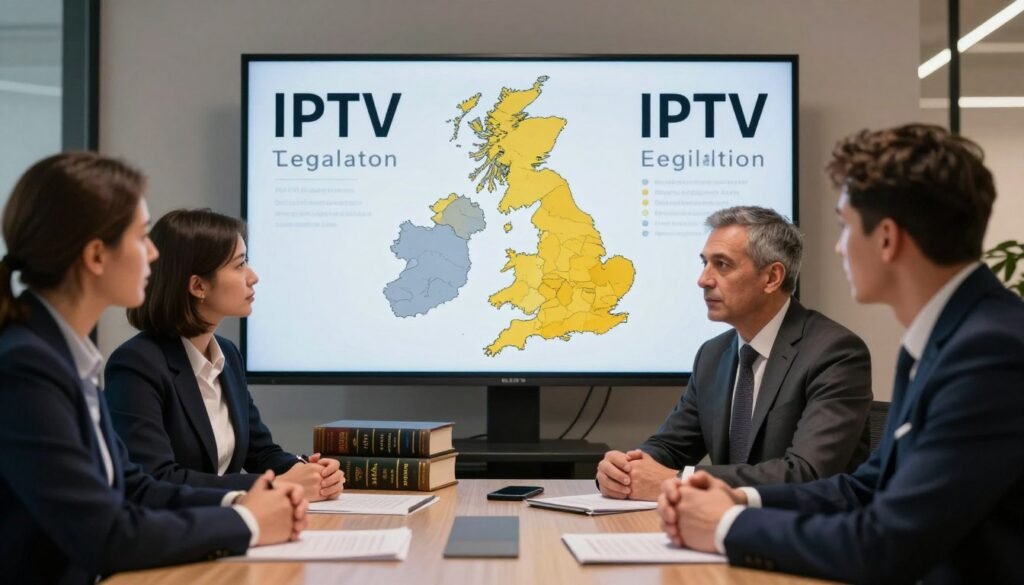
The Digital Economy Act serves as a cornerstone for modernising how the United Kingdom addresses digital copyright infringement. This legislation provides a robust framework that helps authorities manage the complexities of IPTV legality in the UK. By updating existing statutes, the government has created a clearer path for prosecuting those who facilitate illegal streaming.
Impact on Online Infringement Penalties
The Act significantly increased the severity of penalties for those involved in large-scale digital piracy. It empowers courts to impose stricter financial sanctions and longer custodial sentences for individuals who distribute unauthorised content. These measures are designed to deter providers from operating outside the law.
Understanding the IPTV legal aspects UK authorities enforce is essential for any service provider. The legislation ensures that the consequences for non-compliance are substantial enough to discourage the growth of illicit networks. This legal pressure is a vital component in protecting the intellectual property of content creators.
Regulatory Oversight and Monitoring
With OTT-only platforms now representing between 20% and 25% of the total television market in the United Kingdom, the need for oversight has never been greater. Regulatory bodies must constantly monitor these digital streams to ensure they adhere to copyright standards. This task requires sophisticated technology to track traffic and identify potential breaches of the law.
The following table outlines the key enforcement mechanisms used to maintain compliance within the digital television sector:
| Enforcement Mechanism | Primary Objective | Legal Impact |
|---|---|---|
| Traffic Analysis | Identify illegal sources | High |
| Financial Penalties | Deter profit-seeking | Very High |
| ISP Collaboration | Block access points | Moderate |
| Criminal Prosecution | Punish major offenders | Maximum |
Effective monitoring allows regulators to stay ahead of evolving piracy tactics. By focusing on the IPTV legal aspects UK framework, authorities can better protect the integrity of the broadcasting industry. This proactive approach remains a critical pillar in the ongoing effort to uphold IPTV legality in the UK.
Legal Risks for IPTV Service Providers
Understanding the IPTV legal aspects UK market is essential for any business operating within the digital media sector. Those who choose to bypass established broadcasting licences face severe consequences that can dismantle their operations entirely. It is vital to recognise that the regulatory environment is designed to protect intellectual property rights across the nation.
Criminal Liability for Unauthorised Streaming
Operators of unauthorised streaming services often find themselves the target of intense criminal investigations. Authorities frequently pursue these cases under the Copyright, Designs and Patents Act, which carries significant weight in court. Engaging in the distribution of copyrighted content without proper authorisation is not merely a regulatory breach; it is a criminal offence.
Those found guilty of such activities may face substantial fines and potential custodial sentences. The focus on IPTV legality in the UK has intensified, meaning that law enforcement agencies are more proactive than ever. Providers must ensure they hold all necessary permissions to avoid becoming the subject of a criminal inquiry.
Civil Litigation and Financial Penalties
Beyond criminal prosecution, service providers face the constant threat of civil litigation. Rights holders are increasingly aggressive in seeking damages for the unauthorised use of their intellectual property. These financial penalties can be devastating, often leading to the total collapse of a business entity.
Courts may also issue injunctions that force the immediate cessation of services, effectively ending the business model overnight. When considering the IPTV legal aspects UK framework, it is clear that the cost of non-compliance far outweighs the investment required for legitimate licensing. Protecting your business requires a strict adherence to the law to avoid these costly legal battles.
Consumer Liability and IPTV Legality in the UK
Choosing the right streaming provider is more than just a matter of convenience; it is a legal responsibility for every UK household. As digital entertainment continues to evolve, staying informed about UK IPTV legislation is essential for all viewers. Many users inadvertently support piracy by subscribing to services that lack the proper licensing agreements to broadcast copyrighted material.

Understanding the Risks for End-Users
The legal landscape surrounding streaming is often misunderstood by the general public. While authorities primarily target the providers of illegal streams, end-users are not entirely immune to the consequences of accessing pirated content. Engaging with unauthorised platforms can expose your personal data to security risks and potential legal scrutiny under current UK IPTV legislation.
It is vital to recognise that ignorance of the law does not provide a shield against liability. By choosing to stream from illicit sources, you may be participating in a cycle of copyright infringement that undermines the creative industry. Taking a moment to verify the legitimacy of your service provider is a simple yet effective way to protect yourself and support legal content creators.
Distinguishing Between Legal and Illegal Content Access
Identifying a legitimate streaming service does not have to be a difficult task. Most authorised platforms provide clear information regarding their licensing and operational status. To ensure you are accessing content legally, look for these key indicators:
- Official Branding: Legitimate services are usually associated with well-known media companies or established telecommunications providers.
- Transparent Terms: A legal provider will always display clear terms of service, privacy policies, and contact information.
- Secure Payment Methods: Reputable platforms use standard, secure payment gateways rather than requesting unusual or untraceable payment methods.
- App Store Availability: Official apps are typically vetted and available on major platforms like the Apple App Store or Google Play Store.
By following these guidelines, you can navigate the digital marketplace with confidence. Prioritising legal services ensures that you are not only complying with UK IPTV legislation but also enjoying a higher quality, more reliable viewing experience. Making informed choices is the most effective way to contribute to a fair and sustainable digital environment for everyone.
Impact of Recent High Court Rulings
Legal clarity regarding digital content has shifted significantly following a series of landmark judgements in 2025 and 2026. These decisions have provided a much-needed framework for interpreting UK IPTV legislation in an era of rapid technological change. By clarifying the responsibilities of digital platforms, the courts have effectively narrowed the grey areas that previously allowed for widespread ambiguity.
Precedents Set by 2025 and 2026 Judgements
The rulings delivered over the past two years have established stringent expectations for service providers. Judges have consistently emphasised that the mere act of facilitating access to copyrighted material without authorisation constitutes a significant breach of law. These precedents have moved beyond simple copyright infringement, addressing the technical infrastructure that supports illicit streaming networks.
Furthermore, the courts have refined the definition of what constitutes a commercial service in the digital space. By focusing on the financial gain derived from unauthorised access, these judgements have made it easier for authorities to target large-scale operations. This evolution in UK IPTV legislation ensures that the law remains robust against sophisticated attempts to bypass traditional broadcasting protections.
How Judicial Decisions Shape Compliance
Judicial outcomes serve as a blueprint for how companies must structure their operations to remain within the law. When a court issues a ruling, it forces service providers to re-evaluate their business models to avoid potential litigation. Compliance is no longer just a suggestion; it is a fundamental requirement for survival in the modern digital market.
Regulators also rely on these decisions to refine their enforcement strategies. By observing how the High Court interprets existing statutes, agencies can better target their resources toward the most harmful actors. This dynamic relationship between the bench and the regulator ensures that UK IPTV legislation continues to adapt to the realities of the internet, ultimately protecting the integrity of the creative industry.
International Cooperation and Cross-Border Regulation
Digital piracy knows no borders, making international cooperation essential for modern enforcement. Because illegal streaming services often host content on servers located in different jurisdictions, local authorities face significant hurdles. Establishing clear IPTV guidelines UK standards helps align domestic efforts with global security protocols. For current plans and pricing, check our pricing page. Learn how to choose safe IPTV providers in the UK. Find out about TV licence requirements for IPTV. See what customers say in our IPTV UK reviews.

Global Efforts to Curb Digital Piracy
International organisations are increasingly working together to dismantle large-scale piracy networks. These groups share intelligence and technical data to track illicit traffic across multiple countries. By synchronising legal actions, nations can effectively neutralise threats that would otherwise remain untouchable due to jurisdictional gaps.
This global approach ensures that copyright holders receive consistent protection regardless of where the infringement originates. It also forces illegal operators to face consequences in multiple regions simultaneously. Such coordination is vital for maintaining the integrity of the digital marketplace.
UK Participation in International Anti-Piracy Initiatives
The United Kingdom remains a proactive leader in these international anti-piracy initiatives. By adopting robust IPTV guidelines UK, the government ensures that its regulatory framework remains compatible with global standards. This commitment to transparency and legal rigour strengthens the UK’s position in international trade and media agreements.
Domestically, the landscape has stabilised through strategic partnerships. Major providers including Sky, Virgin, BT/EE, and all Freely partners have reached an agreement with public service broadcasters for the carriage of their linear channels. This collaborative environment provides a secure foundation for consumers while reducing the appeal of unauthorised alternatives. These domestic successes serve as a blueprint for other nations seeking to balance innovation with strict copyright enforcement.
Technological Advancements and Compliance Challenges
The rapid evolution of streaming technology continues to outpace traditional regulatory frameworks in the UK. Modern TV operating systems have created a complex economic model where broadcasters must negotiate directly with platform owners to ensure their content reaches viewers. These technological shifts often complicate the application of standard IPTV guidelines UK, as the line between hardware and software becomes increasingly blurred.
The Rise of Encrypted Streaming and VPN Usage
The widespread adoption of end-to-end encryption has made it significantly harder for authorities to monitor data packets in real-time. Many users now rely on Virtual Private Networks (VPNs) to mask their digital footprint, effectively hiding their location and traffic patterns from service providers. This anonymity presents a major hurdle for those attempting to enforce copyright protections across the digital landscape.
Because these tools are widely available for legitimate privacy reasons, distinguishing between lawful use and copyright infringement is a delicate task. Regulators must balance the need for user privacy with the necessity of maintaining robust IPTV guidelines UK. This tension often leads to a cat-and-mouse game between developers of privacy software and those tasked with digital oversight.
Challenges for Regulatory Bodies in Tracking Traffic
Tracking illegal traffic has become a technical nightmare for regulatory bodies due to the decentralized nature of modern streaming. When content is routed through multiple global servers, identifying the origin of a broadcast becomes nearly impossible without extensive international cooperation. Furthermore, the sheer volume of data generated by modern smart TVs makes manual monitoring entirely impractical.
To address these issues, authorities are increasingly looking toward automated traffic analysis and machine learning. However, these tools must still operate within the strict boundaries of current IPTV guidelines UK to remain legally sound. The following table highlights the key differences between traditional and modern enforcement challenges.
| Challenge Type | Traditional Method | Modern Complexity |
|---|---|---|
| Traffic Monitoring | Direct IP tracking | Encrypted VPN tunnels |
| Content Source | Centralised servers | Decentralised P2P networks |
| Regulatory Scope | National jurisdiction | Global cross-border data |
| Compliance Focus | Hardware inspection | Software/OS negotiation |
Ultimately, the future of digital enforcement will depend on how well authorities can adapt to these technical realities. Staying compliant with the latest IPTV guidelines UK requires a proactive approach that accounts for both hardware limitations and the ingenuity of modern streaming software.
Future Outlook for UK IPTV Regulations
The landscape of digital television in the UK is poised for significant transformation as we look toward the future. Regulators are currently evaluating how to adapt existing frameworks to address the rapid growth of streaming technologies. Achieving robust IPTV compliance UK standards will require a proactive approach from both service providers and policymakers.
Anticipated Legislative Shifts
Future policy developments will likely focus on closing loopholes that currently allow unauthorised streaming services to thrive. We expect to see more stringent requirements for digital platforms to verify the source of their content. These shifts aim to ensure that IPTV compliance UK remains a cornerstone of the digital media market.
Legislators are also considering updates to how internet traffic is monitored to prevent copyright infringement. By modernising the legal definitions of digital distribution, the government hopes to create a clearer path for legitimate businesses. This evolution will provide a more stable environment for investment in new media technologies.
Balancing Innovation with Copyright Protection
The primary challenge for authorities is to foster technological innovation without compromising the integrity of public service media. Striking this balance is essential for maintaining a healthy and competitive digital ecosystem. Stakeholders must prioritise IPTV compliance UK to align with these upcoming regulatory expectations.
Future frameworks will likely encourage the development of secure, licensed streaming platforms that offer high-quality content to consumers. By supporting these legitimate services, the UK can protect intellectual property while still embracing the benefits of modern streaming. The following table outlines the expected shift in regulatory priorities over the coming years.
| Regulatory Focus | Current Approach | Future Outlook |
|---|---|---|
| Content Verification | Reactive monitoring | Automated, real-time checks |
| Market Access | Broad oversight | Strict licensing requirements |
| Consumer Protection | Advisory warnings | Integrated platform safeguards |
| Technical Standards | Basic encryption | Advanced, mandatory security |
Ultimately, the goal is to create a sustainable digital environment where innovation flourishes alongside legal accountability. Businesses that stay ahead of these trends will be better positioned to navigate the changing regulatory landscape. Maintaining high standards of IPTV compliance UK will be the key to long-term success in this sector.
Conclusion
The landscape of digital entertainment in the United Kingdom continues to shift as authorities refine their approach to online content. Maintaining strict IPTV compliance UK standards remains vital for both service providers and individual viewers. A secure digital ecosystem relies on the collective effort of all participants to respect intellectual property rights.
Legislative bodies and regulatory agencies are adapting to new streaming technologies with increased speed. This evolution ensures that the law keeps pace with modern innovation while protecting the creative industries. Prioritising IPTV compliance UK helps foster a sustainable market where high-quality content remains accessible to everyone.
Viewers play a significant role in shaping the future of the industry by choosing authorised platforms. Supporting legitimate services guarantees a safer experience free from the risks associated with unauthorised streams. Staying informed about current regulations empowers users to make responsible decisions in an ever-changing digital world.
The path forward involves a balance between technological progress and robust legal protections. By upholding these standards, the United Kingdom maintains its position as a leader in digital media consumption. Engagement with official channels ensures that the enjoyment of television remains a protected and reliable activity for all households.
Leave a Reply